

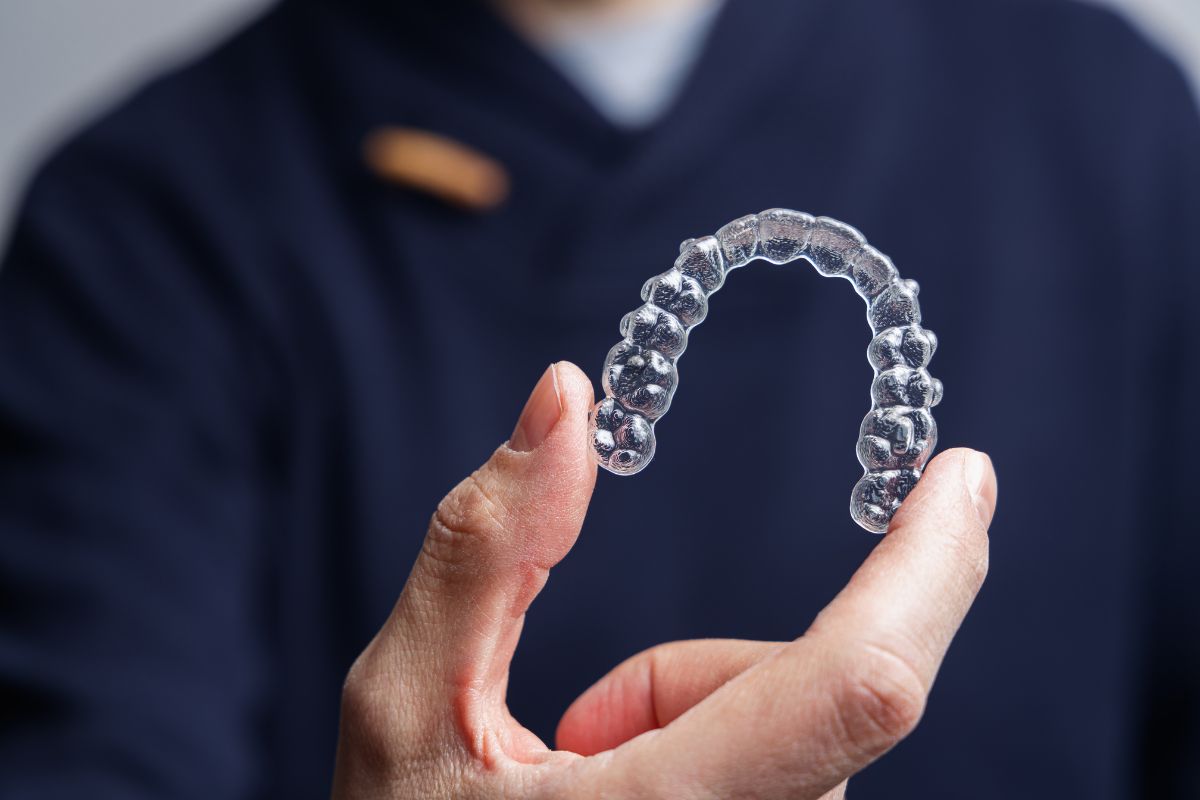
7 Factors That Make You an Invisalign Candidate
If you’re unhappy with crooked, crowded, or unevenly spaced teeth, you may be wondering whether clear aligners could help. One of the first questions patients often ask is, “Am I a good Invisalign candidate?”
The answer depends on more than simply wanting straighter teeth. Your tooth alignment, bite, oral health, treatment goals, and ability to follow the recommended wear schedule all play a role. At Pastrell, Buchanan and Hartzell General Dentistry, patients can explore invisalign treatment in Grants Pass with a personalized consultation to determine whether clear aligners are appropriate for their smile.
Here are seven factors that can help you understand what may be considered during an Invisalign evaluation.
Quick Answer
An Invisalign candidate generally has a dental alignment or bite concern that can be treated with clear aligners and has healthy teeth and gums suitable for orthodontic treatment. Treatment also requires a commitment to wearing removable aligners as directed and attending follow-up visits. A dental professional must evaluate your individual smile before determining whether Invisalign is appropriate.
1. You Have Teeth That Are Crowded or Crooked
Crowded or crooked teeth are among the concerns that may lead someone to explore clear aligner treatment.
When teeth overlap or sit out of alignment, they can be more difficult to clean thoroughly. Orthodontic treatment can address certain alignment problems by gradually moving teeth toward planned positions.
The important question isn’t simply whether your teeth look crooked. Your provider will also consider how they fit together and whether clear aligners can move them safely and predictably.
The American Dental Association notes that orthodontic treatment can address crooked or crowded teeth and certain bite problems, with removable aligners being one possible treatment option under professional supervision.
2. You Have Gaps Between Your Teeth
Spaces between teeth are another reason patients may consider Invisalign.
Some gaps are relatively small and may be suitable for clear aligner treatment, while others may have an underlying cause that needs to be evaluated first. The location and size of the space, the condition of the surrounding teeth and gums, and your overall bite can all affect treatment planning.
Rather than focusing only on how a gap looks, an evaluation considers why the space exists and what type of tooth movement may be appropriate.
3. Your Bite May Need Improvement
Your smile is about more than the position of individual teeth. The way your upper and lower teeth come together is also important.
If an overbite is one of your concerns, treatment time can depend on the severity of the bite issue and your individual treatment plan. If you’re specifically wondering how long it takes to fix an overbite with Invisalign, understanding the factors that influence treatment duration can help you set realistic expectations.
Problems involving the bite, sometimes called malocclusion, can affect how the teeth meet when you chew. Depending on the specific problem, orthodontic treatment may be considered.
The ADA explains that orthodontic treatment can address abnormal bites and that treatment options depend on the patient’s needs and the options provided by the dental professional.
This is why an Invisalign consultation should look at your overall bite rather than focusing only on whether your front teeth appear straight.
4. Your Teeth and Gums Are Healthy Enough for Treatment
Before beginning orthodontic treatment, your oral health matters.
Active dental problems such as untreated tooth decay or gum disease may need attention before or during orthodontic treatment. Your provider may evaluate your teeth and gums to make sure your mouth is in an appropriate condition for moving teeth.
This is also one reason professional evaluation is important. Invisalign isn’t simply a cosmetic product that you order and use without dental supervision. The ADA has raised safety concerns about unsupervised, direct-to-consumer orthodontic treatment because professional evaluation is important for diagnosis, treatment planning, and monitoring.
5. You’re Comfortable Following a Daily Aligner Routine
One of the biggest differences between Invisalign and traditional braces is that Invisalign aligners are removable.
That flexibility can be convenient. You can remove the aligners for eating, drinking, brushing, and flossing according to your treatment instructions. But removable aligners also require responsibility.
The Invisalign service information from Pastrell, Buchanan and Hartzell General Dentistry explains that patients wear each set of aligners for approximately two weeks and remove them for eating, drinking, brushing, and flossing. The practice also notes that appointments are used to monitor treatment progress.
If you frequently forget to put your aligners back in or have difficulty maintaining a consistent routine, discuss that honestly during your consultation.
6. Your Smile Goals Match What Clear Aligners Can Address
Every patient’s smile is different.
You may want to close a small gap. Someone else may be concerned about crowding or the position of several teeth. Another patient may want to address a bite concern.
Clear aligners can be an appropriate orthodontic option for many patients, but they aren’t automatically the right solution for every dental situation. The complexity of your alignment and bite will help determine whether Invisalign can meet your goals or whether another treatment approach should be considered.
A consultation gives you an opportunity to explain what bothers you about your smile and what you hope to change.
7. You’re Willing to Attend Follow-Up Visits
Invisalign treatment isn’t something you simply start and forget about.
Your dental team needs to monitor how your teeth are responding and whether treatment is progressing according to plan. Follow-up appointments can also provide an opportunity to discuss fit, comfort, oral hygiene, or other concerns that arise during treatment.
At Pastrell, Buchanan and Hartzell General Dentistry, the Invisalign service page states that patients typically return approximately every six weeks to check treatment progress, although individual treatment schedules can vary. The practice also states that total treatment time varies from case to case.
Digital Technology Can Help With Treatment Planning
Technology can also be part of the evaluation process.
Our dentist uses an iTero Element 5D intraoral scanner. According to the practice, the scanner can create a detailed 3D model of the teeth and gums and can be used for orthodontic services, including Invisalign. The practice also describes the ability to use the Invisalign Outcome Simulator to show a potential post-treatment smile.
Digital imaging doesn’t replace professional judgment, but it can help make the evaluation and treatment-planning process more informative for patients.
What Happens During an Invisalign Consultation?
An Invisalign consultation is an opportunity to discuss your concerns and determine whether clear aligner treatment is appropriate for your individual situation.
Your dental professional may consider:
- The position and spacing of your teeth
- Crowding or overlapping
- Your bite
- The health of your teeth and gums
- Your smile goals
- Your ability to follow aligner instructions
- Your overall treatment needs
You can also use the appointment to ask practical questions about wearing aligners, cleaning them, appointments, expected treatment steps, and alternatives if Invisalign isn’t appropriate for your particular case.
Is Invisalign Right for Every Patient?
No. Invisalign may be a good option for many people, but candidacy is individual.
The goal isn’t to choose Invisalign simply because clear aligners are discreet or removable. The goal is to choose an orthodontic approach that fits your dental needs and treatment goals.
If another treatment would be more appropriate for your situation, a dental professional can explain why and discuss the available options.
FAQ
What makes someone an Invisalign candidate?
An Invisalign candidate typically has an alignment or bite concern that can potentially be treated with clear aligners, healthy teeth and gums suitable for orthodontic treatment, and the ability to follow the recommended wear and care instructions. A professional evaluation is needed to determine individual suitability.
Can adults be Invisalign candidates?
Yes. Adults can receive orthodontic treatment when their teeth and supporting structures are suitable for treatment. The appropriate option depends on individual oral health, alignment, bite, and treatment goals.
Can Invisalign fix crowded teeth?
Clear aligners may be used to address certain types of tooth crowding. Whether Invisalign is appropriate depends on the degree and nature of the crowding and your overall bite.
How long does Invisalign treatment take?
Treatment time varies by patient and case complexity. The Invisalign information provided by Pastrell, Buchanan and Hartzell General Dentistry states that treatment averages approximately nine to 15 months, while noting that individual treatment times vary.
Do I need a consultation before getting Invisalign?
Yes. A professional evaluation is important because Invisalign treatment needs to be planned around your individual tooth alignment, bite, oral health, and treatment goals.
Conclusion
Wondering whether Invisalign is right for your smile? Start with an evaluation rather than trying to determine candidacy based only on photos or general online information.
Your alignment, bite, oral health, lifestyle, and treatment goals all matter. At Pastrell, Buchanan and Hartzell General Dentistry, patients in Grants Pass can discuss their concerns and explore whether Invisalign may be an appropriate option for their smile.
If you’re considering clear aligners, schedule a consultation to discuss your goals and treatment options with the dental team. You can also see what patients are saying on Google before your visit.
Call Pastrell, Buchanan and Hartzell General Dentistry at +1 5415798236 to get started.